

Modulbeschreibung
Simulation software and numerical techniques are powerful tools to model complex photonic systems, understand their behaviour, optimize their design and performance, and provide excellent support to experimental activities. This module introduces some of the programming tools and software packages that are used for optical and photonics simulations. Module content: Simulations in ray optics, wave optics and multiphysics: demos of commercial software, such as Zemax, Comsol Multiphysics, Ansys Lumerical. Scripting via Python/Matlab for pre-/post-processing, creation of compex geometries via CAD software, and design optimization.
Ihr Dozent
Dr.-Ing. Max Sundermeier
E-Mail
Dr.-Ing. Max Sundermeier
E-Mail
Ihre Betreuerin/ Ihr Betreuer
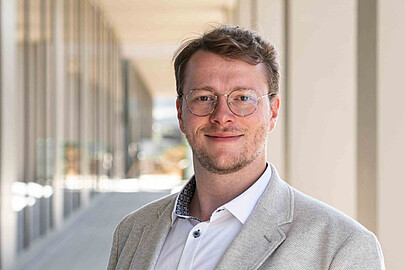
Ulf Lennart Wüllner, M. Sc.
Wissenschaftliche Mitarbeiterinnen und Mitarbeiter
Telefon
E-Mail
Adresse
An der Universität 1
30823 Garbsen
30823 Garbsen
Gebäude
Raum
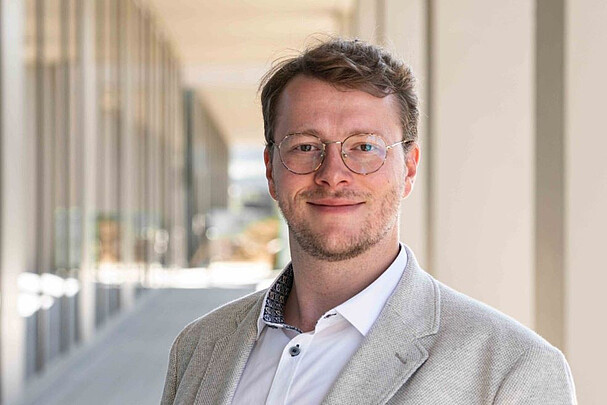
Ulf Lennart Wüllner, M. Sc.
Wissenschaftliche Mitarbeiterinnen und Mitarbeiter
Telefon
E-Mail