



27.04.2025
Full-paper deadline
Sustainable value creation is generated through products and services that are designed, produced, and deployed in ways that contribute in tackling economic, ecological, and social challenges. Practical examples show that such effects rarely come from 'Silver Bullets.' More often, the full potential unfolds through the complementary use of different services. A compelling example is mobility systems that achieve individual transportation through a balanced combination of different modes and services of transportation. Because their elements are not 'tightly coupled,' the underlying ecosystems open up new solution spaces, for example, for the circular management of resources, fair supply chains, responsible cooperation, or contribute to an ecosystem’s resilience. To enable 'sustainable ecosystems' (Schoormann et al. 2024), available offerings must be automatically recognized and recombined in a customer-centric manner. This results in far-reaching requirements, including technical capabilities for data processing and (decentralized) coordination, as well as new operational concepts, such as data sharing and collaborative service delivery. The workshop follows this vision and has been investigating theoretical foundations, empirical evidence, and suitable development methods since 2021.
Data-driven and cyber-physical systems can support key sustainability goals, for example in the areas of sustainable mobility, logistics, healthcare, industry, or urban development. This topic focuses on:
• Empirical studies on the role of data-driven and cyber-physical systems in achieving the 17 Sustainable Development Goals (SDGs).
• Analysis of the impact of the digital transformation of conventional products and services on existing sustainability paradigms through comparative case studies and quantitative research.
• Problem analyses and solution approaches to increase market penetration of sustainable data-driven solutions, including problem-oriented strategies, potential analyses, and cost-benefit assessments.
To make data-driven solutions more sustainable, innovative methods, models, and tools are required. This topic focuses on the following aspects:
• Development and testing of innovative, interactive, and collaborative development methods to support interdisciplinary collaboration in the design of sustainable ecosystems and their (digital) offerings.
• Systematic implementation of intertemporal dependencies and lifecycle management in the development of services for sustainable ecosystems and analysis of their impact on circular strategies (e.g., 9R strategies).
• Development and testing of AI-supported digital twins as a holistic model of sustainable ecosystems, e.g., for the evaluation of sustainability effects or the identification of capability gaps in sustainable ecosystems.
The successful implementation in business and society depends not least on the given regulatory framework, which has been shaped and influenced by research in recent years. We invite contributions that analyze ecosystems or political steering instruments and thereby contribute to their designability. This topic addresses:
• Development of customer-oriented business and cooperation models that create sustainable added value for users through data sharing and data-driven ecosystems.
• Design of infrastructure and regulatory measures (e.g., GAIA-X, EU Data Act, EU AI Act) that enable transparent, secure, and sustainable use of data and support digital governance in, e.g., the financial sector (CRR III) and other industries.
• Integration of (socio-)technical trends, such as electrification in mobility or off-highway machinery, into sustainable ecosystems to develop customer-oriented, resource-efficient, and future-proof solutions.
For the fifth edition of the workshop, the focus will also be on end consumers / customers and users of offerings from sustainable ecosystems. Contributions to this topic, for example, address the qualification and quantification of the value contribution of sustainable offerings or the customer-side configuration of services within the ecosystem (e.g. in the sense of customer co-design) and the corresponding digital tools. We invite both conceptual contributions and behavioral studies. This topic will be represented by Prof. Frances Turner from Ithaca College, NY, as guest editor.
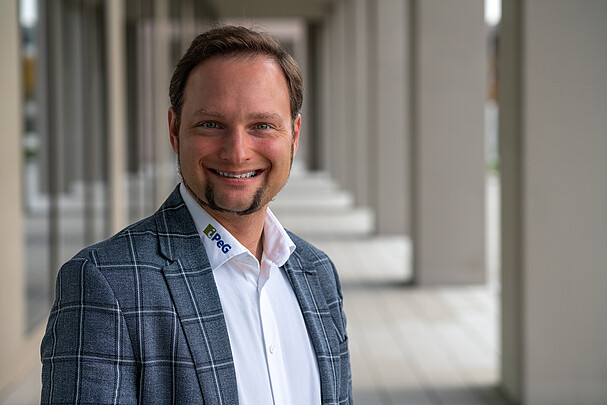
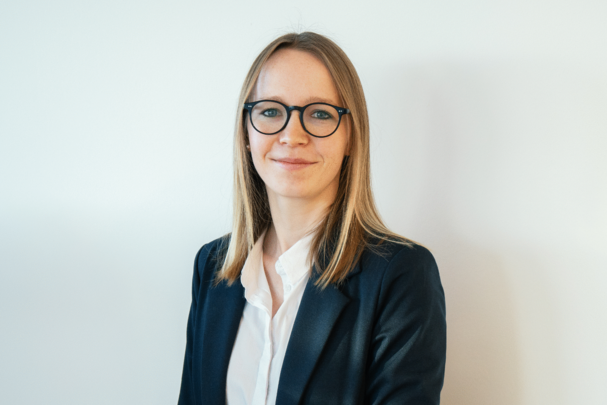
| Prof. Dr. Frederik Möller (TU Braunschweig) |
Prof. Dr. Ricarda Schlimbach (HS Heilbronn) |
| Prof. Dr. Gero Strobel (Uni Stuttgart) |
| Dimitri Petrik (Uni Stuttgart) |
| Henning Gösling (DFKI Kaiserslautern; Smart Factory) |
| Marco Di Maria (Uni Hildesheim) |
| Frances Turner (Ithaca College, New York) (Guest Chair) |
| Oliver Werth (OFFIS Oldenburg) |
| René H. Reich (KU Leuven) |
| Cristina Mihale-Wilson (BrAIniacs GmbH, Göthe Universität Frankfurt) |
| Prof. Dr. Robert Keller (Hochschule Kempten) |
| Kevin Lefeuvre (Bauhaus Universität Weimar) |
| Pauline Weritz (University of Twente) |
The target group of the workshop is primarily focused on researchers but should also provide a platform for practitioners from companies, organizations, or public administration for joint (experience) exchange.
The contribution formats for publication in the conference proceedings (LNI) are planned as follows:
• Long paper – research paper or case study (10 pages; excl. references)
• Short paper – research paper, short communication, or sketch (4 pages; excl. references)
Accepted contributions will appear after a review process (i.e., peer review, blind) in this year's Informatics conference proceedings in the series 'Lecture Notes of Informatics' (LNI). Contributions must adhere to the author guidelines of the LNI template (https://gi.de/service/publikationen/lni) and can be submitted in both English and German.
Furthermore, we would like to invite contributions in alternative formats such as discussion rounds, game-based approaches, prototype presentations, project showcases, practical reports (e.g., pitfalls), or small workshops. Corresponding ideas should be sent by email to the organizing team (Paul Christoph Gembarski, gembarski@ipeg.uni-hannover.de), and will be reviewed for relevance to the workshop, but will not initially be published in the conference proceedings.
The publication requires the registration of at least one author for the INFORMATIK. Each accepted contribution will be presented at the workshop. Please submit your anonymized contribution as a PDF file via EasyChair:
Proceedings
Program – 26.09.2024 in Wiesbaden, GER
Chairs 2024
Program Committee 2024
Marvin Auf der Landwehr (HS Hannover), Helge Fischer (FOM Essen), Christoph Heinbach (Deutsches Forschungszentrum für Künstliche Intelligenz), Ilka Jussen (TU Dortmund), Robert Keller (Hochschule Kempten), Kevin Lefeuvre (Bauhaus Universität Weimar), Frederik Möller (TU Braunschweig), Stephanie Winkelmann (TU Dortmund), Ricarda Schlimbach (HS Heilbronn), Gero Strobel (Universität Duisburg-Essen), Dimitri Petrik (Universität Stuttgart), Joschka Hüllmann (University of Twente), Henning Goesling, tba
Proceedings
Program – 29.09.2023 in Berlin, GER
Chairs 2023
Program Committee 2023
Dennis Behrens (Data Scientist), Katja Bley (Technische Universität Dresden), Helge Fischer (FOM Essen), Sven Jannaber (LVM Versicherung), Ilka Jussen (TU Dortmund), Robert Keller (Hochschule Kempten), Marvin Auf der Landwehr (HS Hannover), Cristina Mihale-Wilson (Goethe-Universität Frankfurt), Frederik Möller (TU Braunschweig, Fraunhofer ISST), Dimitri Petrik (Universität Suttgart), Gero Strobel (Universität Duisburg-Essen), Jannis Vogel (DFKI Osnabrück), Stephanie Winkelmann (TU Dortmund)
Proceedings
Program – 26.09.2022 in Hamburg, GER
Chairs 2022
Program Committee 2022
Dennis Behrens (Data Scientist); Katja Bley (Technische Universität Dresden); Helge Fischer (FOM Essen); Lucas Hüer (HS Osnabrück); Marie Kammler (HWG Ludwigshafen); Robert Keller (Hochschule Kempten); Babett Kühne (Kühne + Nagel); Sven Jannaber (LVM Versicherung); Cristina Mihale-Wilson (Goethe-Universität Frankfurt); Frederik Möller (TU Dortmund); Maren Stadtländer (Universität Hildesheim); Frederic Stahl (DFKI Oldenburg, Marine Perception); Andreas Varwig (Consultant Data Science); Sebastian Werning (IU Internationale Hochschule); Jannis Vogel (DFKI Osnabrück)
Proceedings
Program – 27.09.2021 virtual
Chairs 2021
Program Committee 2021
Dennis Behrens (Data Scientist); Helge Fischer (FOM Essen); Lucas Hüer (HS Osnabrück); Marie Kammler (HWG Ludwigshafen); Robert Keller (Hochschule Kempten); Babett Kühne (Universität Hamburg); Sven Jannaber (LVM Versicherung); Kai Lingemann (DFKI Osnabrück, Planbasierte Robotersteuerung); Cristina Mihale-Wilson (Goethe-Universität Frankfurt); Frederik Möller (TU Dortmund); Sebastian Sieloff (Startup Center HI-Cube GmbH); Maren Stadtländer (Universität Hildesheim); Frederic Stahl (DFKI Oldenburg, Marine Perception); Andreas Varwig (Consultant Data Science); Sebastian Werning (IU Internationale Hochschule); Jannis Vogel (Universität Osnabrück)